
Knee Pain Treatment in St. Marys
Knee pain relief in St. Marys, KS. Dr. Durbin assesses hip-to-foot alignment and corrects the biomechanics driving your knee pain — no drugs required.
Chiropractic care for knee pain
Get to the root of your knee pain
Also known as: Knee Joint Pain, Runner's Knee, Patellofemoral Pain
Knee pain is rarely just a knee problem. The hip, knee, and foot work as one kinetic chain — when alignment or movement breaks down anywhere in that chain, the knee bears the cost. At Prairie Star Chiropractic in St. Marys, Dr. James Durbin evaluates your whole movement pattern, identifies the true driver of your pain, and builds a drug-free corrective plan aimed at getting you back to running, squatting, and climbing stairs comfortably.
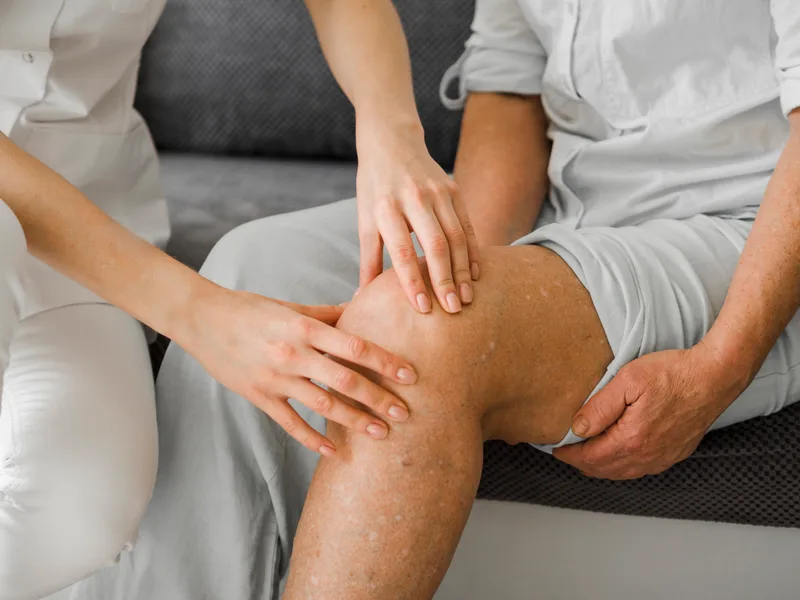
Symptoms of knee pain
- ✓Pain around or under the kneecap during activity
- ✓Pain with stairs, squatting, or getting up from a chair
- ✓Stiffness after sitting for long periods or first thing in the morning
- ✓Swelling or warmth around the knee joint
- ✓A clicking, grinding, or popping sensation with movement
- ✓A feeling that the knee may give way or buckle
- ✓Aching that worsens when running, hiking, or standing for long periods
Common causes
- Overuse and runner's knee (patellofemoral pain syndrome)
- Poor hip or foot alignment that shifts load onto the knee
- Muscle imbalances — weak glutes, tight hip flexors, or weak quads
- Osteoarthritis or wear-and-tear in the joint
- Old injuries, ligament sprains, or meniscus damage
- Sports and repetitive-motion activities
- Flat feet or gait abnormalities that stress the knee from below
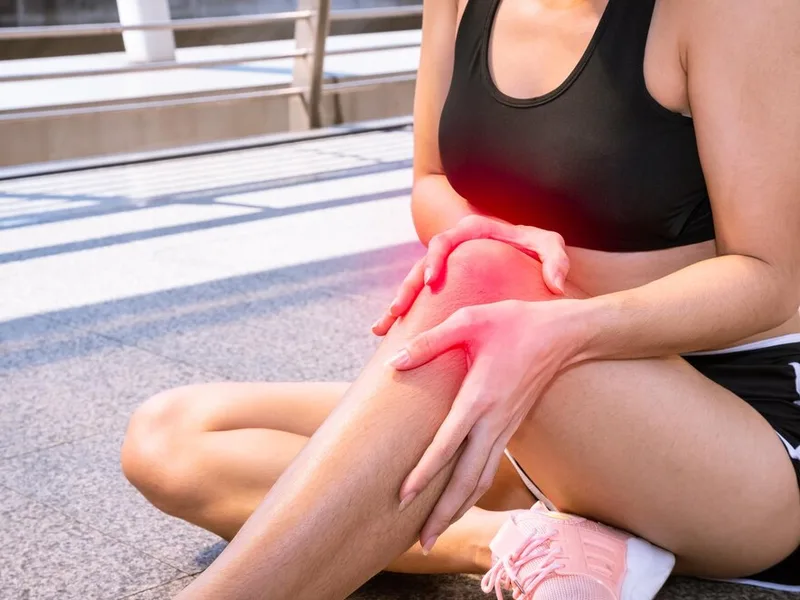
Our approach
How we treat knee pain in St. Marys
- Step 1
Movement & alignment exam
We assess your posture, gait, hip strength, and foot mechanics — not just the knee itself — to find which link in the chain is creating the problem and what it will take to address it.
- Step 2
A personalized corrective plan
You get a clear, plain-English explanation of what we found and a care plan targeting the root cause, which Dr. Durbin reviews with you as you progress.
- Step 3
Adjustments & corrective care
We combine gentle adjustments of the knee, hip, and foot (by hand or with the low-force Activator instrument) with targeted home exercises to restore proper movement, balance the muscles around the knee, and build the strength that keeps pain from returning.
The basics
Understanding knee pain
The knee is the largest joint in the body — and one of the most commonly injured. What makes knee pain tricky is that the knee is often the victim, not the culprit. It sits in the middle of a mechanical chain that runs from your hips through your feet, and when anything above or below moves poorly — a stiff hip, weak glute, flat foot, or overpronating ankle — the knee absorbs the extra load.
That's why treating knee pain by focusing only on the knee misses the point for many patients. Runner's knee, patellofemoral pain, and repetitive overuse injuries almost always trace back to a movement or alignment problem elsewhere in the chain. At Prairie Star Chiropractic, we assess the whole system, not just the joint that hurts. When the underlying mechanics are corrected through gentle adjustments, athlete-focused care, and targeted home exercises, many people see lasting improvement without medication or surgery.
New Patient Special
visit
A first-visit special for new patients.
Book your first visit
Book online in a minute, or call and we will find a time that fits your day.
Self-pay and cash-pay practice.
When to see a chiropractor in St. Marys
Most knee pain benefits from early attention — problems that start as muscle imbalances or alignment issues can progress to cartilage wear if left unaddressed. Consider booking an exam if you notice:
- Knee pain that lasts more than a week or keeps returning after activity
- Pain or stiffness with stairs, squatting, running, or sitting for long periods
- Swelling, warmth, or clicking that wasn’t there before
- Pain that has you changing how you walk or favoring one leg
- Knee discomfort that limits your training, work, or everyday activities
Important: if your knee locked up suddenly, gave way after a significant impact, or you heard or felt a pop during a fall or collision, please seek prompt evaluation — these can be signs of a ligament or meniscus injury that may require orthopedic care. We screen for these on your first visit and refer appropriately.
During your exam at our St. Marys office, Dr. Durbin reviews your history, assesses hip and ankle mechanics, and tests knee stability and alignment. You’ll leave with a clear picture of what’s happening and a specific plan to address it.
Types of knee pain we treat
“Knee pain” covers a wide range of problems, and the right treatment depends on what’s actually driving it. We help people in the St. Marys area with:
- Patellofemoral pain syndrome (runner’s knee) — kneecap tracking problems caused by weak glutes, tight IT bands, or poor foot mechanics; see our athlete care page for more.
- IT band syndrome — lateral knee pain common in runners and cyclists, rooted in hip weakness and gait faults that adjustments and targeted home exercises directly address.
- Knee osteoarthritis — wear-and-tear that responds to gentle mobilization, home exercises, and load management to slow functional decline (see our arthritis page).
- Sports and overuse injuries — ligament sprains, meniscus irritation, and repetitive-strain injuries that benefit from early, conservative care.
- Biomechanical knee pain — pain traced to hip weakness, foot pronation, or sciatica-related nerve tension altering how you load the joint.
Your exam tells us which type you’re dealing with, so your plan targets the real problem — not a one-size-fits-all protocol.
What to expect at your first visit
Your first appointment is unhurried, and it’s all about understanding your knee before we treat it. We’ll:
- Listen to your story — when the pain started, what aggravates it, your activity level, and how it’s affecting your daily life.
- Assess the full chain — posture, gait, hip strength, and foot mechanics alongside knee stability and alignment testing, so we find which link is creating the overload.
- Explain what we found — in plain English, with a specific care plan and clear milestones so you know you’re progressing.
- Start care when appropriate — your first gentle adjustment and home-exercise guidance may begin the same day. Knee and foot adjustments can be done by hand or with the low-force Activator Method.
You’ll leave your first visit with a clear explanation of what we found and a plan to address it — and any ongoing visits are always your choice.
Drug-free knee pain relief
Pain medication numbs the knee; surgery is a major step that’s rarely the right first move for mechanical knee pain. Chiropractic care offers a third path — correct the movement fault, strengthen the supporting muscles, and relieve the pain without drugs or downtime. Gentle chiropractic adjustments, targeted home exercises, and, for runners and athletes, athlete care are built around your movement pattern, not a generic protocol, with the goal of getting you back to running, squatting, and the activities you love — and keeping you there. If your exam ever suggests you need imaging or an orthopedic consultation, we’ll tell you honestly and help you get there.
Why choose Prairie Star Chiropractic in St. Marys
At Prairie Star Chiropractic, knee care starts with the diagnostic work. Instead of treating the knee in isolation, Dr. James Durbin evaluates your full movement pattern and pinpoints exactly which mechanical fault is overloading the joint.
From there, your plan of chiropractic adjustments, targeted home exercises, and athlete care for active patients is designed around your movement — not a generic protocol. If hip weakness is the culprit, we address the hip. If the problem chains down from the hip through the knee, we treat the chain. Every plan has measurable milestones, and Dr. Durbin reviews your progress with you along the way.
Ready to get started? Check out our New Patient Special and book your exam online.
Why choose chiropractic
Chiropractic care vs. the typical knee-pain routine
| Comparison factor | Chiropractic Care | Pain Meds & Surgery |
|---|---|---|
| Targets the root cause | ✓Corrects movement & alignment | ✕Masks the symptoms |
| Drug-free & non-invasive | ✓Always | ✕Rarely |
| Risk of side effects | ✓Minimal | ✕Higher (meds, surgery) |
| Whole-chain assessment | ✓Hip, knee, and foot evaluated | ✕Knee treated in isolation |
| Builds lasting strength | ✓Home exercises in every plan | ✕Seldom addressed |
| Typical recovery approach | ✓Active & progressive care | ✕Often rest, meds, or surgery |
Treatment options
Services we use to relieve knee pain
Chiropractic Adjusting Techniques
Gentle, precise chiropractic adjustments in St. Marys, KS that restore motion to restricted joints and relieve back pain, neck pain, and headaches at the source.
Learn more →Activator Method Technique
Activator Method chiropractic in St. Marys — a spring-loaded, low-force instrument adjustment for all ages, backed by decades of research. Gentle, precise, effective.
Learn more →Athlete Care
Sports chiropractic in St. Marys helps athletes of every level recover from strains and overuse injuries and return to play stronger, with a clear, staged plan.
Learn more →Related conditions
Other conditions we treat in St. Marys
What causes knee pain?+
Most knee pain is biomechanical — it comes from how the hip, knee, and foot move together. Overuse, muscle imbalances (especially weak glutes or tight hip flexors), poor alignment, old injuries, and arthritis are the most common drivers. Our exam identifies which factor is loading your knee incorrectly so we can target it directly.
How can I relieve knee pain at home?+
Gentle movement, ice for acute swelling, and light strengthening of the glutes and quadriceps often help in the short term. Avoid prolonged rest — the surrounding muscles weaken quickly. If pain persists more than a week, recurs often, or limits your daily activities, book an exam so we can correct the underlying cause rather than just manage it.
Can a chiropractor help knee pain?+
Yes. Chiropractors are trained to assess the full kinetic chain — hip mobility, knee tracking, and foot mechanics — and to correct the movement faults that overload the knee. Gentle extremity adjustments and targeted home exercises help manage knee pain effectively for many patients without drugs or surgery.
Why does my knee hurt when I run?+
Runner's knee (patellofemoral pain syndrome) is usually caused by the kneecap tracking incorrectly — most often because of weak glutes, tight IT bands, or overpronation at the foot. We assess all three and build a corrective plan specific to your gait, with the goal of getting you back to running pain-free.
When should I see a chiropractor instead of a surgeon for my knee?+
Conservative care is the right first step for most knee pain — especially overuse injuries, muscle imbalances, and early arthritis. We'll be upfront — if your exam suggests a significant ligament or meniscus tear, severe locking, or instability that points to structural damage, we refer you to the appropriate specialist rather than treating through it.
How many visits will I need?+
It depends on what's driving your knee pain and how long you've had it. After your exam, Dr. Durbin recommends a care plan matched to what he finds and explains the reasoning — no pressure. Many people notice meaningful improvement within the first few weeks.
Do you treat knee pain for athletes and runners?+
Absolutely. Our athlete care is built for runners, cyclists, school athletes, and recreational athletes, and it addresses the training load and movement mechanics that create overuse knee injuries.
Is chiropractic safe for knee arthritis?+
Gentle mobilization and home exercises can help manage the pain and stiffness of mild to moderate knee arthritis, reduce compensatory strain on other joints, and slow functional decline. We screen carefully and will recommend orthopedic consultation when arthritis is severe.
Do I need imaging before my first visit?+
Usually not. We screen for red flags and assess movement clinically on your first visit. We recommend imaging only when the findings suggest it will change your treatment — such as suspected fracture or significant structural injury.
Do you see patients from outside St. Marys?+
Yes. Our St. Marys office is a short drive along US-24 from Rossville, Wamego, Belvue, and Silver Lake. See our directions page for the route, or book an appointment online.